The Colours of India:
How Art Reflects Our Cultural Heritage
SHARE:

SHARE:
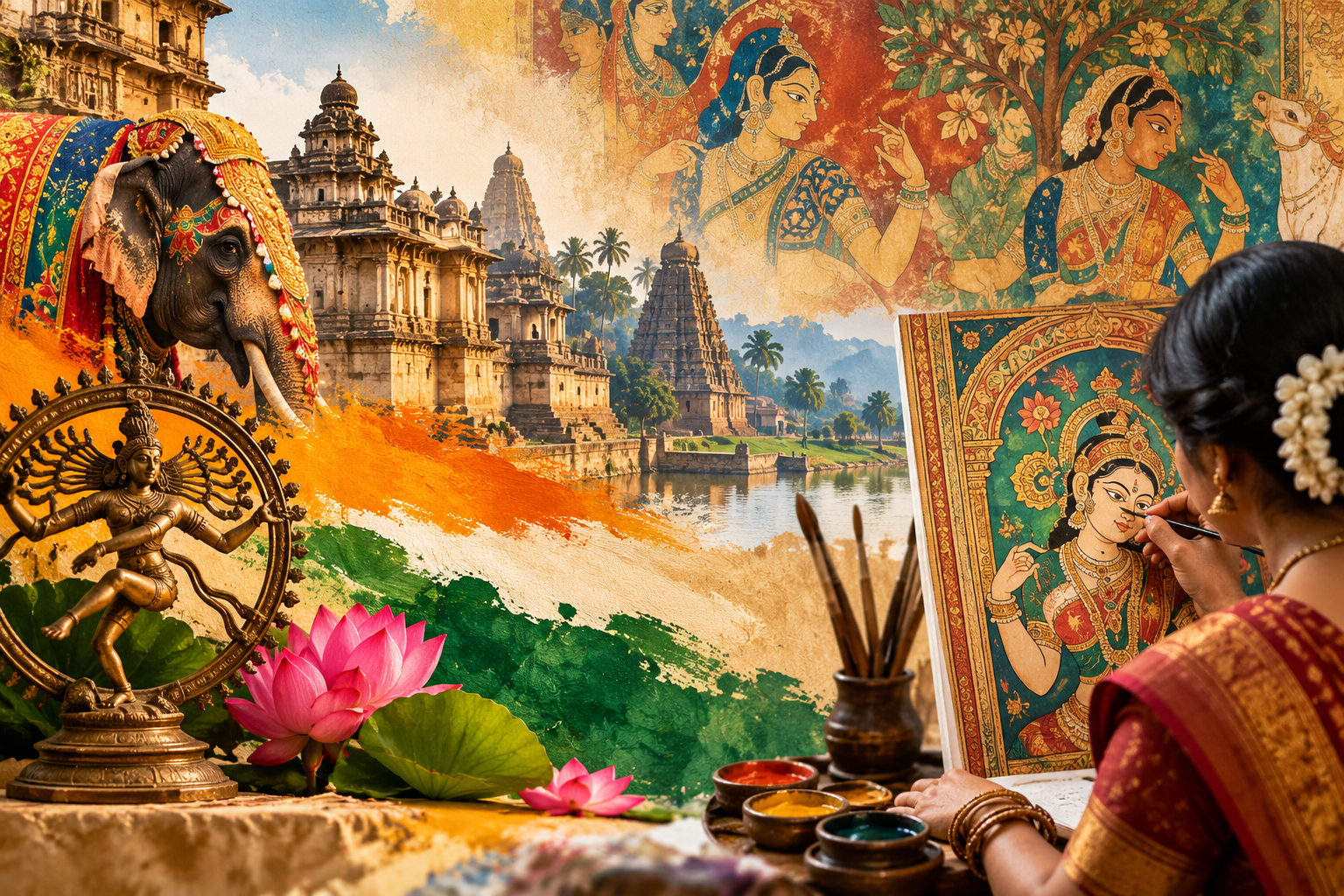
India is a land of extraordinary colours, diverse traditions and artistic expressions. From the intricate patterns of traditional paintings to the vivid murals found in ancient temples, Indian art reflects the stories, beliefs and cultural identity of generations.
Every region of India has its own artistic language. The colours used by an artist, the patterns painted on a canvas and the subjects represented often reveal something about the community, its traditions and its connection with the world.
"Indian art is a celebration of life, where every colour, pattern and brushstroke carries a story of culture and heritage."
Colours play an important role in Indian art and traditional celebrations. They are often associated with emotions, nature, spirituality and everyday life. Artists use colour not only to make their work visually appealing but also to express deeper ideas and feelings.
Red frequently appears in Indian wedding traditions, festive decorations and paintings, where it can represent love, celebration and auspicious beginnings. Saffron is widely associated with spirituality, devotion and sacrifice.
Green brings to mind nature, growth and renewal. Blue is prominent in many Indian artistic traditions, including paintings depicting Krishna and other mythological narratives.
Gold, ochre, brown and terracotta shades appear in traditional paintings, temple art and decorative crafts. These colours create a connection with India's architectural heritage, natural materials and historical artistic practices.
India's artistic heritage includes a remarkable variety of painting styles. Each art form has developed through its own regional traditions, materials, techniques and ways of telling stories.
Originating in the Mithila region of Bihar, Madhubani painting is known for its intricate patterns, bold outlines and vibrant colours. Artists often depict nature, animals, festivals and mythological subjects, creating compositions rich in symbolism.
Warli painting, associated with Maharashtra, uses simple geometric shapes to represent people, animals, village life and community celebrations. Its distinctive visual language demonstrates how even minimal forms can communicate meaningful stories.
Pattachitra paintings, particularly associated with Odisha, are recognised for their detailed compositions and mythological narratives. Kalamkari, practised in parts of Andhra Pradesh and Telangana, is celebrated for its hand-painted or hand-drawn designs on fabric, often featuring stories from epics and nature-inspired motifs.
Every traditional art form offers a unique window into the history, imagination and identity of its people.
Indian paintings are more than decorative creations. They preserve stories about communities, religious traditions, historical events, occupations and everyday experiences.
From royal court paintings to village murals, artworks offer glimpses into the lives of people from different periods. They reveal the clothing, architecture, customs and celebrations that have shaped India's cultural landscape.
Many traditional paintings portray deities, sacred stories, festivals and spiritual practices. These works help communities preserve cultural knowledge and pass familiar narratives from one generation to the next.
Through these details, art becomes a visual record of India's cultural diversity, preserving aspects of life that written records may not fully capture.
Nature has always been an important source of inspiration for Indian artists. Flowers, birds, rivers, trees, mountains and animals appear throughout traditional paintings and decorative art forms.
Lotus flowers, peacocks, elephants and flowering vines are recurring motifs in many Indian artistic traditions. Depending on the context, these elements may communicate beauty, devotion, prosperity, renewal or a connection with the natural world.
Historically, artists in different regions used naturally derived pigments and locally available materials to create their work. Earth pigments, plant-based colours and other traditional materials contributed to the distinctive appearance of particular painting traditions.
Nature-inspired patterns continue to influence contemporary paintings, textiles, home décor and modern interpretations of traditional Indian art. These designs connect today's creative expressions with the landscapes and artistic practices of the past.
In Indian art, nature is not merely a background. It is often an essential part of the story.
Traditional Indian art continues to find a place in contemporary interiors. A carefully selected painting can introduce colour, character and cultural depth into a modern living space.
A vibrant folk painting or a detailed traditional artwork can become the focal point of a living room, hallway or reading corner. Placing it against a neutral wall allows its colours and intricate patterns to stand out.
Indian art can complement modern furniture, natural materials, indoor plants and understated décor. The combination creates a balanced interior that feels contemporary while retaining a sense of cultural identity.
By bringing traditional art into everyday spaces, we allow our heritage to remain a living part of modern life rather than something confined to museums.
The colours of India represent more than visual beauty. They reflect the country's regional identities, creative traditions, spiritual beliefs and shared memories. Every painting carries the influence of the artists, communities and generations that helped shape its tradition.
Preserving Indian art means appreciating traditional techniques, supporting artists, learning about regional art forms and introducing younger generations to the stories behind these creations. It also means encouraging contemporary artists to reinterpret heritage in meaningful new ways.
At Gallery of Canvas Art (GOCA), we celebrate artistic expression and the stories that paintings can communicate. Exploring Indian art allows us to discover the beauty of our heritage while finding new ways to connect with it today.
"Every colour carries a memory, every brushstroke preserves a tradition, and every painting keeps a part of India's heritage alive."