The Beauty of Abstract Art:
Understanding Emotion Through Colors & Forms
SHARE:

SHARE:
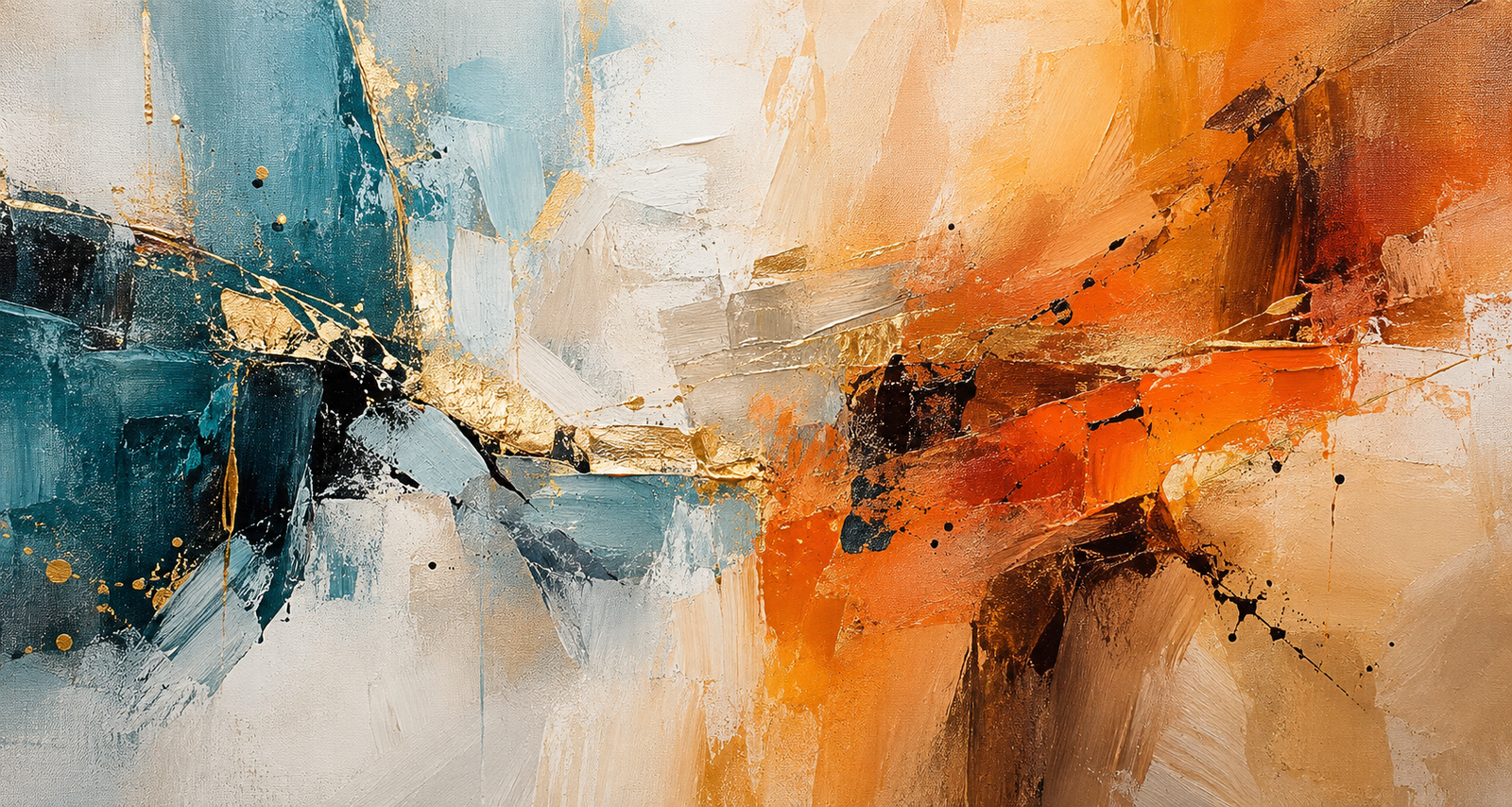
Abstract art invites us to look beyond the literal and experience art through emotion, colour, movement and form. Instead of presenting an exact representation of the world around us, abstract artists use visual elements to communicate ideas, moods and feelings in a deeply personal way.
A single painting can mean something completely different to two people. One viewer may see calmness in a soft combination of colours, while another may experience energy, nostalgia or excitement. This freedom of interpretation is one of the most beautiful qualities of abstract art.
Colour is one of the most powerful elements in abstract painting. Artists carefully combine shades, contrasts and tones to create a particular emotional atmosphere.
Reds, oranges and yellows can create a sense of warmth, passion, movement and energy. These colours often attract attention and bring intensity to a composition.
Blues, greens and softer shades can create feelings of calmness, balance and reflection. Their presence can make an artwork feel peaceful and contemplative.
Colour does not simply decorate an artwork — it helps create its emotional voice.
Abstract art also depends heavily on shapes, lines and composition. Curved lines may suggest movement and softness, while sharp geometric forms can create structure, tension and visual rhythm.
When viewing an abstract artwork, try not to search immediately for a recognizable object. Instead, notice how your eyes move across the canvas and how different forms interact with one another.
What does the artwork make you feel? Which colour catches your attention first? Does the composition feel calm, energetic, balanced or spontaneous?
One of the defining characteristics of abstract art is that it does not always need to be explained. Sometimes the emotional response created by an artwork is more important than understanding exactly what the artist intended.
This makes abstract art deeply personal. The same painting can become a different experience depending on who is looking at it and what they bring to the moment.
You do not need to be an art expert to appreciate abstract art. Give yourself time to observe the artwork without trying to immediately define it.
There is no single correct way to experience an abstract artwork. Your response is part of the artwork's story.
Abstract art reminds us that not everything needs to have a literal explanation. Through colour, texture, form and movement, artists can communicate feelings that words sometimes cannot express.
“Abstract art does not ask you to find the answer. It invites you to discover your own experience.”