Life in Old India:
Preserving Our Heritage Through Paintings
SHARE:

SHARE:
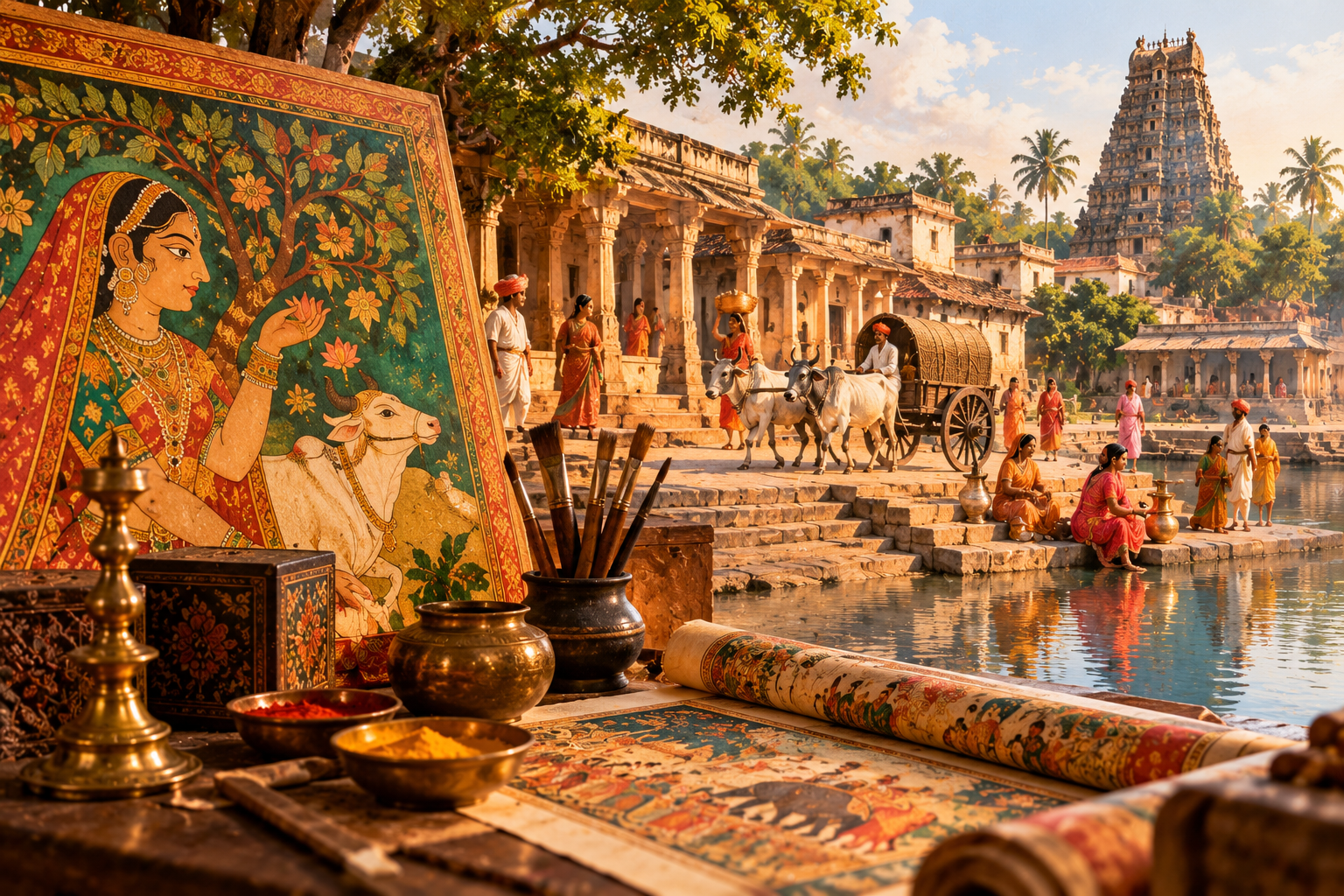
Long before cameras captured everyday moments, paintings offered a remarkable way to record the world around us. Across India, artists depicted royal courts, village communities, bustling markets, religious ceremonies and celebrations, preserving glimpses of life from different historical periods.
These artworks are more than beautiful images. They provide visual clues about clothing, architecture, occupations, traditions and social customs. Through their details, we can begin to understand how people lived, worked, celebrated and expressed their beliefs.
Traditional Indian paintings allow us to explore the past through the eyes of artists who transformed their surroundings and experiences into lasting works of art.
"Every heritage painting preserves a moment in time, allowing future generations to discover the stories of those who came before."
Royal paintings provide fascinating glimpses into the lives of kings, queens, nobles and court communities. Many Indian miniature painting traditions developed under royal patronage, recording ceremonies, hunting expeditions, musical gatherings, portraits and important courtly events.
Mughal miniature paintings are admired for their fine details, carefully observed figures and elaborate compositions. Many works portray emperors, court life, gardens, animals and historical events, offering insights into the visual culture of their time.
Rajput paintings often depict royal life, mythology, devotional themes, romance and nature. Their vivid colours, expressive figures and distinctive compositions reflect the artistic traditions of different courts and regions.
These paintings help us imagine the atmosphere of historical courts while reminding us that every artwork reflects the artistic choices and perspectives of its creator.
India's cultural history is not limited to palaces and royal courts. Village communities, farmers, artisans, traders and families have also shaped the country's artistic heritage. Many traditional and folk art forms portray everyday activities alongside festivals, religious beliefs and local stories.
Farming, harvesting, animal husbandry and seasonal activities have influenced artistic traditions across India. Paintings depicting these subjects help communicate the importance of agriculture and the relationship between communities and their environment.
Traditional scenes may portray potters, weavers, musicians, merchants and other craftspeople at work. These representations offer a glimpse into the skills, trades and community interactions that formed part of everyday life.
Festivals, weddings, folk performances and religious gatherings are recurring subjects in many Indian art traditions. They express shared experiences and illustrate how communities celebrate important occasions.
From a village festival to a family gathering, ordinary moments can become extraordinary stories when preserved through art.
Across India, generations of artists have passed down painting techniques, patterns and storytelling traditions. Each art form offers its own way of documenting cultural experiences and expressing a community's relationship with its history.
Originating in the Mithila region of Bihar, Madhubani painting is known for its intricate patterns, bold outlines and vivid colours. Its subjects often include mythology, nature, rituals and community life.
Associated with Maharashtra, Warli art uses simple geometric forms to depict human figures, animals, village activities and community celebrations. Its distinctive visual language communicates stories through remarkably economical shapes.
Pattachitra, especially associated with Odisha, is recognised for its detailed compositions and narrative subjects. Kalamkari, practised in parts of Andhra Pradesh and Telangana, is celebrated for hand-painted or hand-drawn designs on fabric, often featuring mythology, nature and traditional motifs.
One of the most fascinating aspects of historical paintings is the wealth of detail they contain. Buildings, fabrics, ornaments, furniture and landscapes often provide clues about the environments represented and the artistic conventions of the period.
Palaces, temples, courtyards, pavilions and gardens appear in numerous Indian painting traditions. These representations reveal how architecture was incorporated into visual storytelling and how artists imagined or recorded important settings.
Detailed depictions of garments, headwear, ornaments and textiles help us explore historical styles of dress. Although paintings may idealise their subjects, they can still offer valuable visual evidence when studied alongside other historical sources.
Everyday objects, musical instruments, flowers, animals and decorative motifs can provide additional context. Some elements carry symbolic meanings, while others help establish a scene, its setting or the identity of the figures portrayed.
The smallest details can open a larger conversation about the people, places and traditions represented in a painting.
Paintings are an important part of our cultural record, but they are most valuable when understood within their historical context. They can preserve visual details, illustrate stories and inspire questions about the people and communities of the past.
Museums, galleries, collectors, researchers and artists all contribute to preserving heritage artworks. Careful documentation, conservation and responsible display can help protect paintings from deterioration and ensure that their stories remain accessible.
Exploring historical paintings encourages people to ask questions about daily life, cultural practices, artistic methods and regional identities. Art can make history more engaging by giving viewers a visual starting point for further discovery.
Preserving heritage is not simply about protecting old objects. It is also about keeping the knowledge, creativity and cultural meaning associated with them alive.
Traditional Indian paintings offer a rich and varied view of the past. From royal ceremonies and palace architecture to village festivals and everyday occupations, they preserve visual stories that continue to inspire curiosity and appreciation.
By learning about regional painting styles, supporting artists and preserving heritage artworks, we can help ensure that these traditions remain meaningful in the modern world. Each painting offers an opportunity to connect with India's artistic legacy and explore the experiences of earlier generations.
At Gallery of Canvas Art (GOCA), we celebrate the power of paintings to communicate culture, memory and imagination. Discover the beauty of traditional Indian art and appreciate the stories that continue to live through every brushstroke.
"When we preserve our paintings, we preserve the memories, traditions and imagination of the generations that came before us."