From Royal Palaces to Modern Homes:
The Timeless Beauty of Indian Art
SHARE:

SHARE:
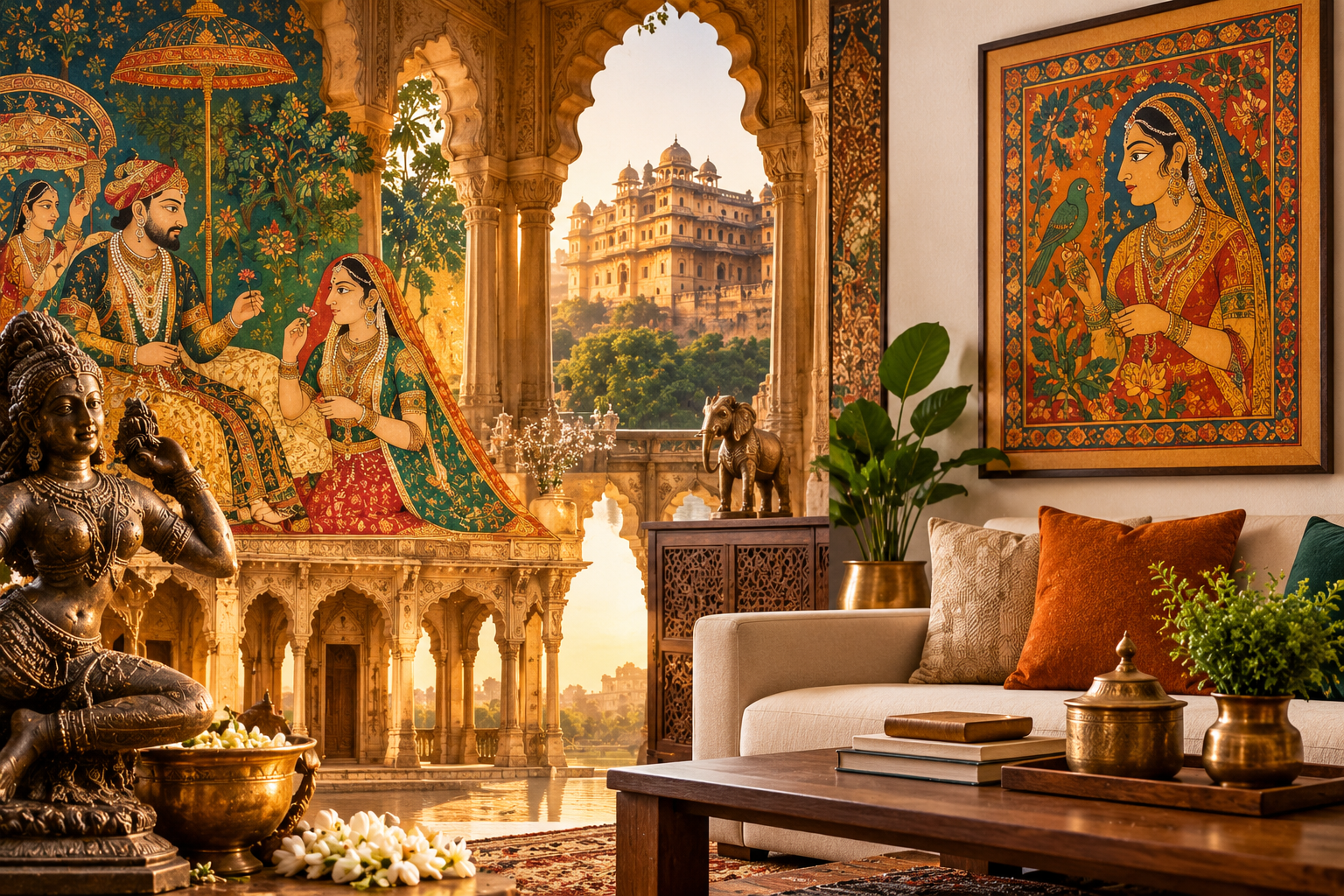
Imagine walking through the grand halls of an Indian palace, surrounded by intricate paintings, beautifully carved pillars, elegant murals and artwork that reflects centuries of history. Indian art has long been associated with royal courts, temples, cultural traditions and the creative vision of skilled artisans.
Royal patrons played an important role in encouraging painters, sculptors and craftspeople. Across different kingdoms and historical periods, artists created detailed miniature paintings, portraits, illustrated manuscripts and decorative works that captured courtly life, mythology, nature and important events.
Today, the influence of these artistic traditions extends far beyond palace walls. Indian paintings continue to inspire collectors, designers and homeowners who appreciate the relationship between cultural heritage and contemporary living.
"The beauty of Indian art lies in its ability to preserve the spirit of the past while inspiring the creativity of the present."
India's artistic landscape is incredibly diverse. Every region has developed distinctive techniques, materials, motifs and storytelling traditions. Together, these art forms represent a rich heritage that continues to inspire artists and art lovers.
Tanjore painting, originating in Tamil Nadu, is renowned for its rich colours, devotional themes and distinctive decorative relief work, often incorporating gold foil. Traditionally depicting Hindu deities and sacred subjects, these paintings bring a sense of richness and visual presence to the spaces in which they are displayed.
Indian miniature paintings are admired for their intricate details, carefully composed scenes and expressive use of colour. Different traditions, including Mughal and Rajput painting, portray royal courts, landscapes, romantic poetry, historical narratives and everyday life.
Folk art brings the creativity of local communities into vivid focus. Madhubani, Warli, Gond and Pattachitra are examples of Indian art traditions that use distinctive visual languages to express stories about nature, spirituality, community and cultural identity.
Each traditional painting style offers a unique perspective on India's artistic imagination.
Historically, paintings and decorative artworks appeared in royal residences, religious spaces and the homes of patrons who valued craftsmanship. They could express devotion, document important events, celebrate achievements or demonstrate an appreciation for artistic excellence.
As art became more accessible to a wider audience, traditional painting styles found new places in private collections and domestic interiors. Collectors began appreciating artworks not only for their beauty but also for their cultural meaning and the stories they preserve.
A painting can remind a family of its traditions, celebrate a meaningful occasion or represent a personal connection to a particular region or artistic style. Unlike temporary decorations, a carefully chosen artwork can remain meaningful through changing trends and generations.
In this way, art becomes more than an object displayed on a wall. It becomes part of the stories people share within their homes.
Contemporary interiors often combine clean lines, functional furniture and understated colours. Traditional Indian paintings can introduce warmth, intricate detail and cultural character into these spaces without compromising their modern feel.
A large traditional painting can become the centrepiece of a living room, entrance or dining area. Choosing a wall with enough visual space allows the artwork to stand out and gives visitors an opportunity to appreciate its details.
In a room with neutral walls and simple furniture, a colourful Indian painting can introduce depth, texture and a distinctive focal point. Wooden furniture, natural fabrics and carefully selected accessories can complement the artwork.
The key is to create a thoughtful balance between the artwork, its surroundings and the atmosphere you want your home to express.
Choosing art is a personal experience. The most suitable painting is not necessarily the most elaborate or expensive one. It is the artwork that connects with your taste, your space and the atmosphere you want to create.
Consider the dimensions of the wall and the furniture around it. A large artwork can anchor a spacious room, while a smaller painting may work better in a compact area or as part of a carefully arranged gallery wall.
Traditional Indian paintings often feature vivid reds, greens, blues, golds and earthy shades. You can select artwork that harmonises with your existing palette or use contrasting colours to create a striking focal point.
Explore the history, technique and subject behind a painting. Learning about the tradition it represents can make your choice more meaningful and help you develop a deeper appreciation for the artist's work.
The right artwork does not merely fill an empty wall. It gives the space a story and a sense of identity.
Traditional art continues to thrive when people recognise its value, learn about its origins and support the artists who practise these techniques. Appreciation from collectors, families and cultural institutions can help sustain artistic knowledge and encourage new generations to explore heritage art.
Choosing original artworks, learning about artists and understanding the techniques involved in a painting can help create a stronger connection between art lovers and the creative community.
Introducing children and young people to traditional paintings can encourage creativity, curiosity and an appreciation of cultural diversity. Art provides an engaging way to explore stories, symbols, regional identities and different ways of seeing the world.
By making Indian art part of our homes and everyday experiences, we help ensure that its beauty and cultural significance remain visible for generations to come.
From the grandeur of royal courts to the warmth of contemporary living rooms, Indian art has continued to evolve while retaining its remarkable ability to tell stories. Its colours, patterns, subjects and techniques connect us with the people and traditions that shaped India's artistic heritage.
Bringing traditional paintings into modern homes is one way of keeping that heritage close. Whether it is a devotional Tanjore painting, a detailed miniature or a vibrant folk artwork, each piece can add personality and cultural depth to a living space.
At Gallery of Canvas Art (GOCA), we celebrate the enduring beauty of paintings and the stories they carry. We invite you to discover the richness of Indian artistic traditions and explore how meaningful artwork can transform the spaces we call home.
"From royal palaces to modern homes, great art reminds us that beauty, culture and creativity can transcend generations."